


Cannabis History • Culture • Nostalgia
The Legend of the 90s Christmas Tree Bud
A look back at the neon green, pine-scented phantom strain that defined the holidays in the 1990s, its mysterious disappearance, and the modern hunt to bring it back.
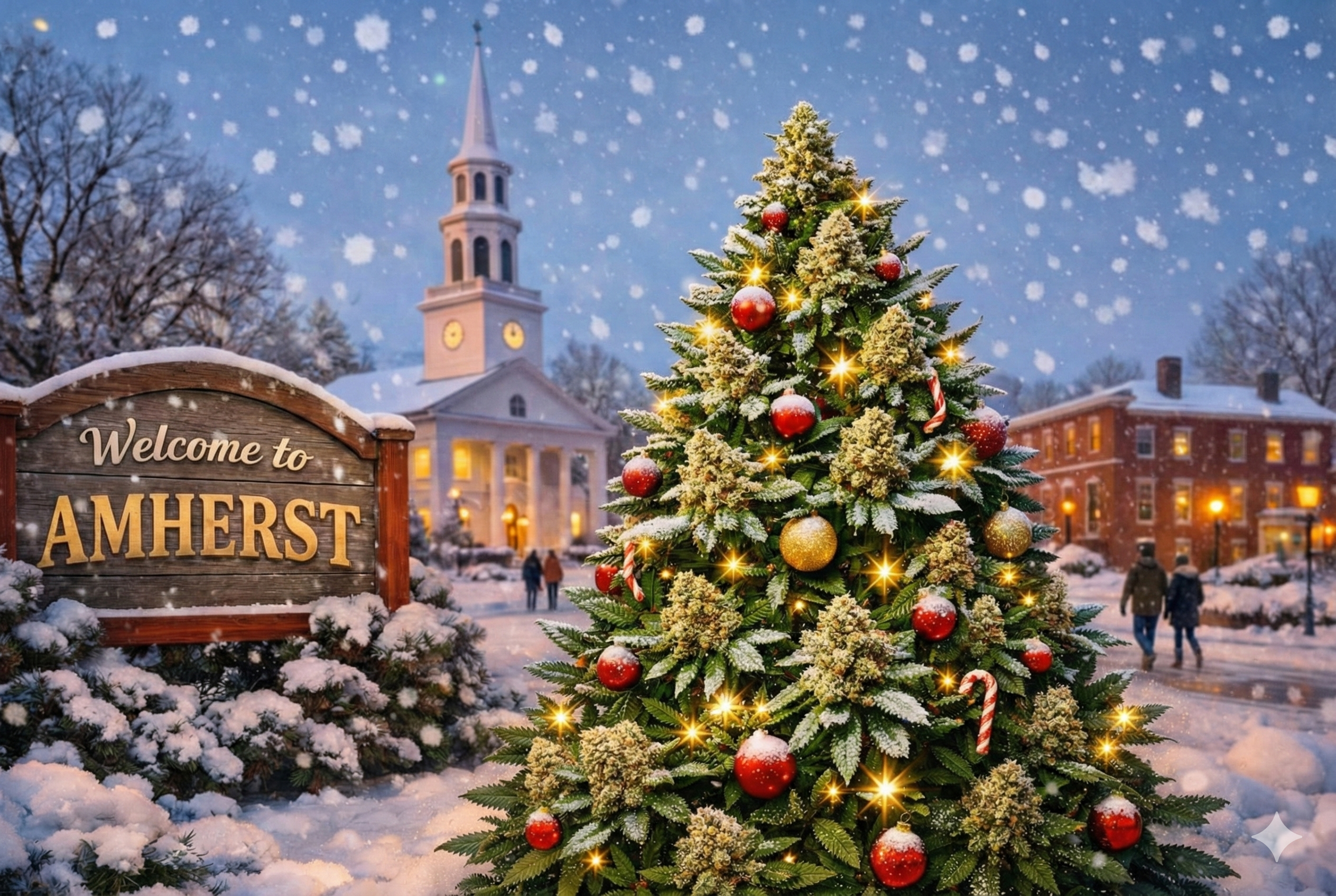
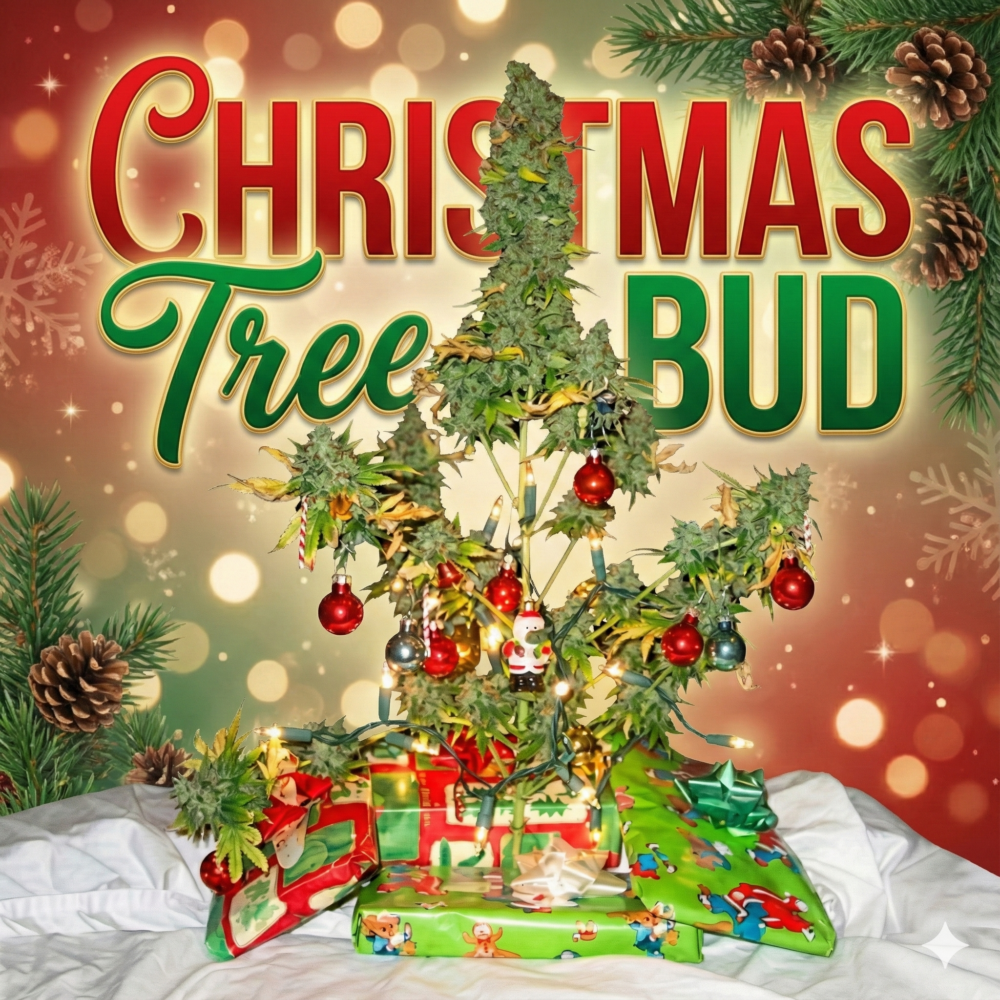
Image: The legendary neon green buds against a snowy Western Mass backdrop.
TL;DR
- In the early 90s, a distinct strain known as "Christmas Tree bud" appeared annually in December across the U.S.
- It was famous for its neon green color, pinecone shape, and aggressive scent of pine, spruce, and turpentine.
- Unlike modern "dessert" strains, this bud had a heavy, lung-expanding smoke and a "cement" high.
- The strain vanished around 1997 as the market shifted toward indoor hydroponics and fruitier terpene profiles.
- Preservationists like CSI Humboldt are working to revive these genetics through heirloom strains like the '79 Christmas Tree.
- The phenomenon represents a collective sensory memory of the final days of organic, sun-grown dominance.
The arrival of "The Bag"
The wind hits you differently in Western Massachusetts. If you spent any time living in Amherst, MA during the early 90s, you know exactly the kind of cold I’m talking about. It isn’t just temperature; it’s a damp, heavy weight that rolls off the Holyoke Range and settles deep in your bones.
Back then, before the internet took over our brains and before we could order cannabis like a pizza, life moved slower. We wore a lot of flannel, listened to a lot of bootleg cassette tapes, and spent a lot of time waiting.
But for me and my circle, the biting cold of December signaled something other than the holidays. It signaled the arrival of "The Bag."
It happened like clockwork. Every year, usually around the second week of December, the town would suddenly get flooded with what we called the Christmas Tree bud. We didn’t know a damn thing about genetics back then. We didn't sit around debating phenotypes, total cannabinoids, or terpene percentages. We knew two things: the guy said it came from outdoor growers in Vermont, and it was, without question, the best smoke on the planet.
For decades, I thought this was just a local legend—a "you had to be there" memory specific to the Pioneer Valley. But a few years ago, feeling that heavy nostalgia hit me, I threw up a simple post on social media: “Who remembers the Christmas Tree bud from the 90s?”
I expected a few likes from old friends in Amherst. Instead, the post caught fire. Hundreds of comments rolled in. And here is the kicker: they weren't just from New England. I had people chiming in from Chicago, Detroit, the cornfields of Nebraska, and the valleys of Southern California. They all told the exact same story. They described the exact same smell. They all remembered that specific, lung-crushing heaviness.
That’s when I realized I wasn’t just reminiscing about my own past; I was tapping into a massive, unorganized collective memory. We were all chasing the same ghost.
The anatomy of a legend: What made it special?
To understand why this weed matters so much to us old-school heads, you have to remember what the landscape looked like in 1993.
For ten months out of the year, we were smoking commercial brick weed. You know the stuff—brown, compressed into a tire shape, smelling like ammonia and hay. You spent half your session using a gatefold LP cover to separate the seeds from the shake. If you were lucky, maybe you found some "Beesters" (commercial BC Bud) later in the decade, but even that felt soulless.
The Christmas Tree bud was an alien species compared to that stuff.

First, let’s talk about the look. These weren’t the manicured, rock-hard, vacuum-sealed nuggets you get at dispensaries today that look like moon rocks. These were pinecones. Literal pinecones. They were a vivid, neon green—a color that looked radioactive against a gray winter sky. They were shaggy, leafy, and covered in bright red and orange hairs that looked like tinsel.
But the smell... that was the fingerprint. It didn't smell like "weed" in the skunky sense. It smelled like a condensed forest. It was an aggressive assault of pine, spruce, and peppermint, with a chemical undertone of turpentine or wet paint. It was so resinous that if you broke a bud up by hand, your fingers would stay sticky until New Year's Eve.
We were told it was grown outdoors in Vermont, hardened by the northern frost to survive the harvest. That made sense to us. The weed felt winter-proof. It was hardy.
And the high? It was heavy. One hit was usually enough to sit you down. It hit your lungs like "quick-dry cement." It was an expansive, cough-inducing smoke that settled immediately behind the eyes. It was hallucinogenic, clear yet heavy, and absolutely festive.
The collective memory
When I started digging into the old forums—places like 420 Magazine and ICMag—I realized this wasn't just an Amherst thing.
I found a thread by a guy named Icemud from the Chicago area. Reading his posts was like reading my own diary. He wrote about a strain in the Midwest from 1991-1995: “These buds were so delicious, a mix between a pinetree and a peppermint candy cane... very dense, with bright green and bright red hairs.”
The geographic spread is baffling. How was the same "Christmas Bud" hitting Amherst, MA, downtown Chicago, and the suburbs of Detroit at the exact same time every year?
The theories ran wild:
- The Emerald Triangle Theory: Some claimed it was a massive distribution network of outdoor growers from Northern California, shipping their late October harvests east just in time for the holidays.
- The Canadian Connection: Others swore it was early versions of "God Bud" or "Purple Indica" coming down from British Columbia.
- The Vermont Green: But us New Englanders? We held the line. We believed this was Vermont Green.
One user, PhytoGem, mentioned a friend bringing it back from Flint, Michigan, calling it "Holy S**t" weed. We were all experiencing the same phenomenon.
The death of Pinene and the shift to "Dessert Weed"
Somewhere around 1996 or 1997, the Christmas Tree bud just... vanished.
It didn’t taper off; it just stopped coming around. The market shifted. Indoor hydroponics took over. The "Kush" era began. Everything started smelling like fuel, lemon, or berries. The distinct Pinus terpene profile—specifically Alpha-pinene—seemed to get bred out of the commercial gene pool.
Don't get me wrong, modern weed is a marvel of science. It’s potent, it’s clean, and it tastes like lemon tarts or blueberry muffins. But nobody grows weed that tastes like a Douglas Fir anymore.
I think that’s why the nostalgia is so potent. It’s not just about getting high; it’s about a flavor that doesn’t exist in the modern palette. We went from smoking a forest to smoking a fruit basket.
In my deep dive through the internet archives, I watched growers lament this loss. They bought seeds with "Pine" in the name—Pine OG, Northern Lights—only to be disappointed. They got skunk. They got earth. They got citrus. But they didn't get the Christmas Tree. It seemed like the genetics were lost to time, perhaps seized in a DEA raid on a massive outdoor operation in '96, or maybe the mother plants just drifted away as growers chased higher yields and faster flowering times inside their garages.
The resurrection: CSI Humboldt and the '79
But every mystery has a lead, and my investigation eventually pointed me toward the West Coast preservationists. In the deep discussions of genetic lineage, one name kept popping up as the potential savior of the Christmas spirit: CSI Humboldt.
CSI Humboldt, also known as "Nspecta," is a legend in cannabis breeding. He's the guy who preserves "heirloom" strains—genetics that haven't been muddied by the modern poly-hybrid craze. The word on the digital street was that he held a cut called '79 Christmas Tree.
The story goes that this strain originated from an old-school grower known as "NDNguy." It was an IBL—an Inbred Line—meaning it had been stabilized over decades of outdoor growing. It wasn't a fancy hybrid; it was a pure, unadulterated Afghan heritage plant that had acclimated to the North American climate.
According to the forum lore I dug up, this '79 Christmas Tree checks every single box of my memories from Amherst.
Smell: Pure cedar and pine.
Structure: Christmas tree shape, pinecone buds.
Harvest: It’s a late finisher, usually coming down in late October or early November, which explains why it always hit the streets in December.
I read reports from growers who managed to get their hands on CSI Humboldt’s seeds. They posted pictures, and my heart skipped a beat. There it was. The shaggy structure. The neon green. They described the smell as "evergreen pine" with that "old school" vibe.
There is also a strong connection to a strain called Pine Tar Kush (PTK). A breeder named Tom Hill is famous for this line. Some forum detectives believe that what we smoked was a version of PTK, or that the '79 Christmas Tree and PTK are cousins, separated at birth but carrying the same pine-forest DNA.
Was it just the nostalgia?
I haven’t managed to get my hands on the CSI Humboldt '79 yet. Part of me is afraid to. What if I smoke it and it’s just… weed? What if the magic wasn't in the terpenes, but in the time?
Maybe the Christmas Tree bud tasted so good because I was young and life lay out in front of me like an open map. Maybe it was the relief of surviving another year in Western Mass. Maybe it was the camaraderie of squeezing four people into a tiny room to hit a one-hitter, blowing smoke out the window into the freezing Amherst night so the neighbors wouldn't call the cops.
But I don't think it's just nostalgia.
The fact that hundreds of strangers on the internet—people I have never met, from different walks of life—all share this specific sensory memory suggests something real. We experienced a peak moment in cannabis history: the final glory days of organic, sun-grown, heirloom hybrids before the industry went corporate. That weed had character. It had a season. You couldn't get it in July, and that made it special. It taught us patience.
So, here’s to the phantom growers of the 90s. Whether you were actually in the Green Mountains of Vermont, hiding in a hollow in Southern Ohio, or deep in the Emerald Triangle, you created a holiday tradition that beat the hell out of eggnog.
And to the guys like CSI Humboldt keeping the '79 alive: you’re doing the Lord’s work. One of these days, I’m going to track down a bag of that piney, cement-lung goodness. I’ll wait for a snowy night in December, put on a 90s hip-hop tape, and spark it up.
If I cough until I think I’m dying, I’ll know I finally found it.
Frequently Asked Questions
What exactly was "Christmas Tree Bud"?
It was a specific, widely distributed strain of cannabis prevalent in the early-to-mid 1990s, known for its pinecone structure, neon green color, and intense pine/turpentine scent. It typically arrived in December.
Why did it disappear?
The market shifted in the late 90s toward indoor hydroponic growing and different genetic profiles (like Kush and desserts). The specific outdoor conditions and genetics that created the "Christmas Tree" profile fell out of favor commercially.
What did it smell like?
Unlike the "skunky" or "fruity" smells of modern cannabis, Christmas Tree bud smelled like a condensed forest: pine, spruce, peppermint, and a chemical note often described as turpentine.
Is "Christmas Tree Bud" the same as Pine Tar Kush?
It is likely related. Many enthusiasts believe the Christmas Tree bud was either Pine Tar Kush (PTK) or a close cousin like the '79 Christmas Tree preserved by breeders like CSI Humboldt.
Can I buy this strain today?
It is difficult to find in commercial dispensaries, which favor fruity/sweet profiles. However, heirloom seeds (like CSI Humboldt's '79 Christmas Tree) exist for home growers looking to recreate the experience.
Where was it grown?
Theories vary. New Englanders believed it was Vermont outdoor; Midwesterners heard it was from NorCal; others suspected British Columbia. It was likely a hardy Afghan IBL (Inbred Line) grown outdoors in northern climates.
Why was it called "Christmas Tree"?
Because of its timing (arriving in December), its look (pinecone shaped, green with red "tinsel" hairs), and its distinct evergreen scent.