




Federal Policy • Cannabis • Regulation
Trump Directs Federal Agencies to Pursue Schedule III for Marijuana: What It Means and What It Doesn’t
A December 18, 2025 executive order begins the process of moving marijuana from Schedule I to Schedule III, reshaping research, taxes, and federal posture without legalizing nationwide adult-use sales.
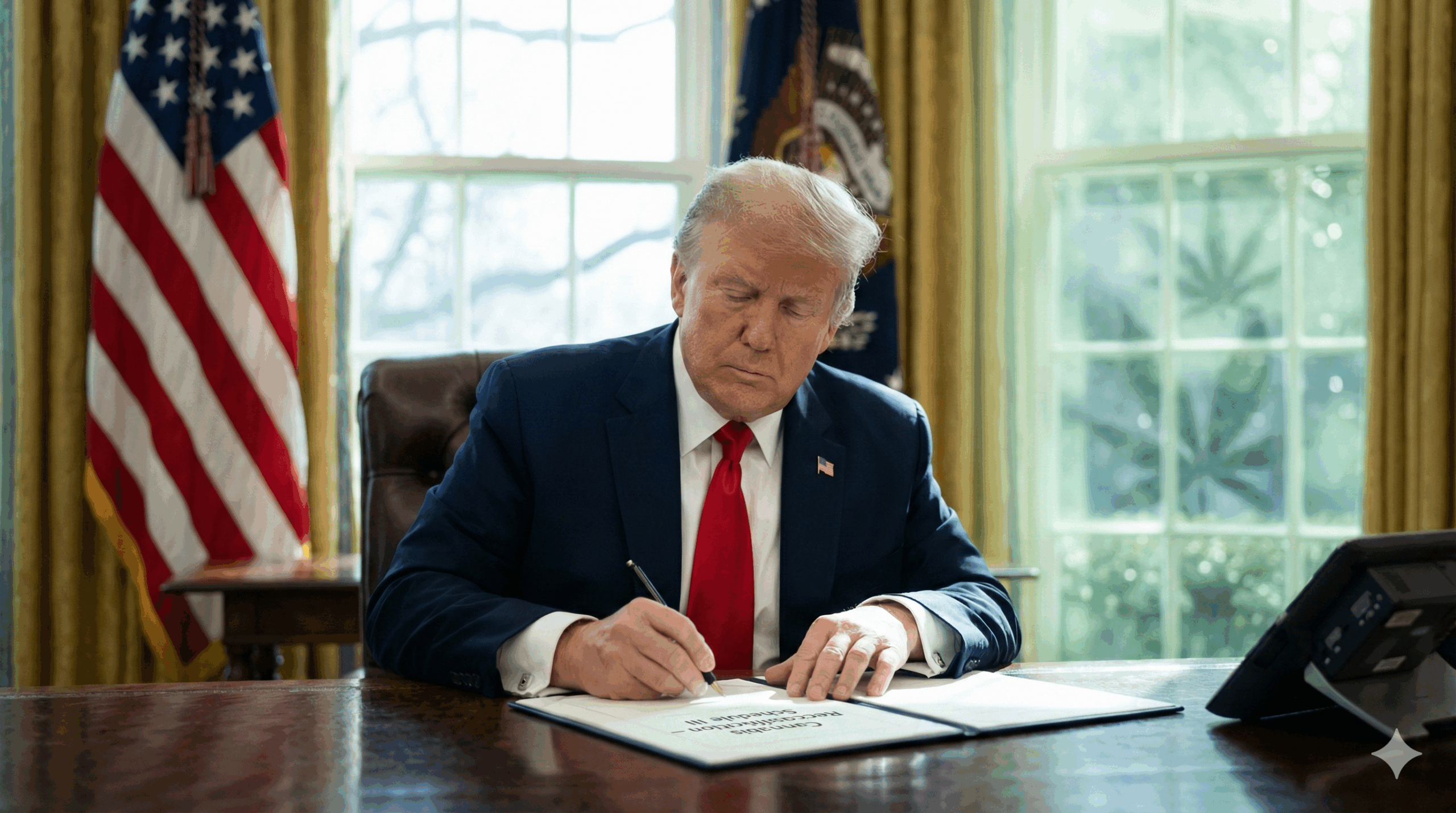
Image: President Trump signs executive order regarding Schedule III classification.
TL;DR
- President Donald Trump issued an executive order on December 18, 2025 directing agencies to begin reclassifying marijuana from Schedule I to Schedule III.
- Schedule III recognizes medical value and removes major federal barriers to cannabis research.
- Rescheduling would end IRS 280E, allowing state-legal cannabis businesses to deduct normal operating expenses.
- This move does not legalize adult-use cannabis nationwide or establish interstate commerce.
- The order is tied to a federal-state CBD Research Pilot Program focused on healthcare and evidence-based regulation.
- Congress remains responsible for broader reforms beyond rescheduling.
What just happened
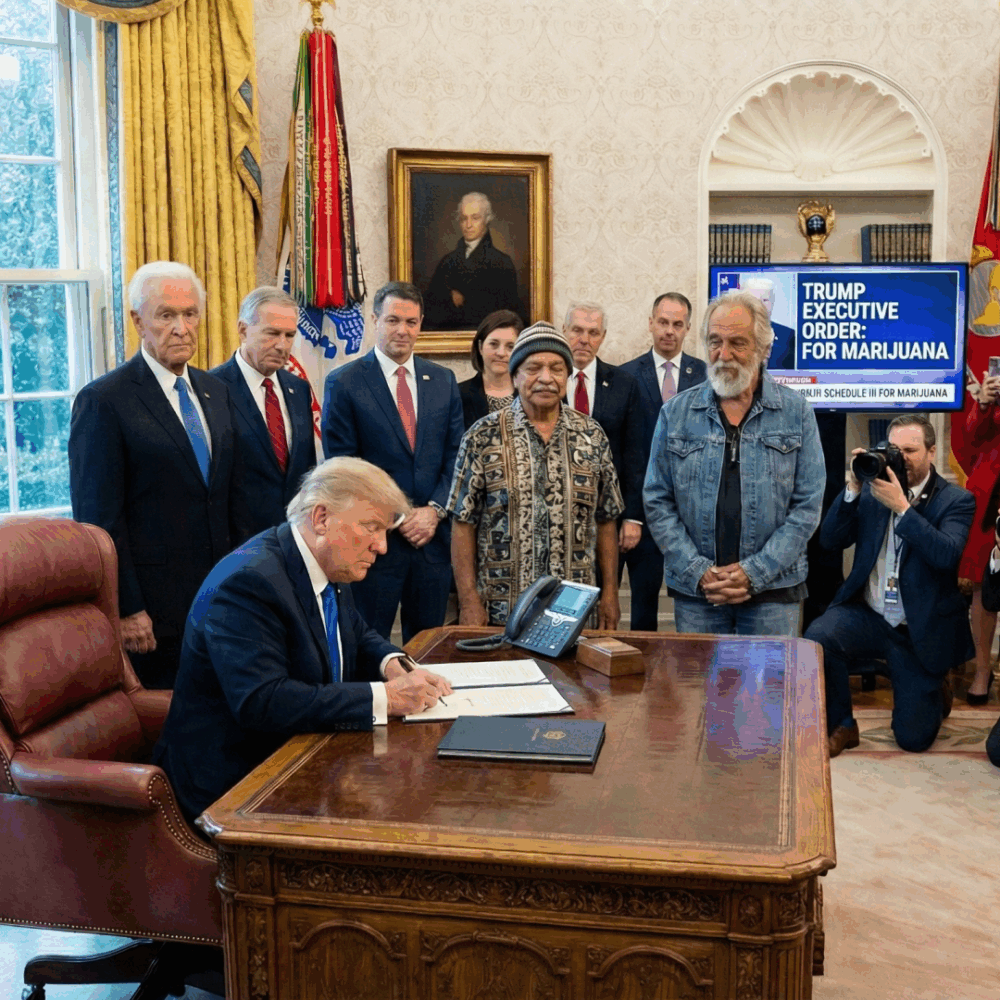
On December 18, 2025, President Donald Trump signed an executive order directing federal agencies to begin the formal process of reclassifying marijuana from Schedule I to Schedule III under federal law. That single directive represents the most significant shift in federal cannabis policy in more than fifty years.
For decades, marijuana has been grouped alongside heroin under Schedule I of the Controlled Substances Act, a category reserved for substances deemed to have no accepted medical use and a high potential for abuse. That classification increasingly conflicted with reality as medical cannabis programs expanded across nearly every U.S. state.
The path to this decision is notable. The rescheduling process began under the Biden administration through scientific and regulatory review and was finalized under President Trump. That continuity signals that cannabis reform has moved beyond partisan politics and into institutional consensus.
While the executive order does not immediately change the law, it sets the direction. Federal agencies are now instructed to treat cannabis as a substance with recognized medical value, fundamentally altering how it is viewed within the federal system.
Why Schedule III matters
Schedule III substances remain controlled but are recognized as having legitimate medical uses and a lower potential for abuse. Moving marijuana into this category reshapes its legal, scientific, and regulatory standing.
One of the most important changes involves research. Schedule I status has long restricted cannabis studies in the United States through excessive approval requirements and limited access to legal research material. Schedule III removes many of these barriers, enabling universities, hospitals, and pharmaceutical researchers to study cannabis more freely.
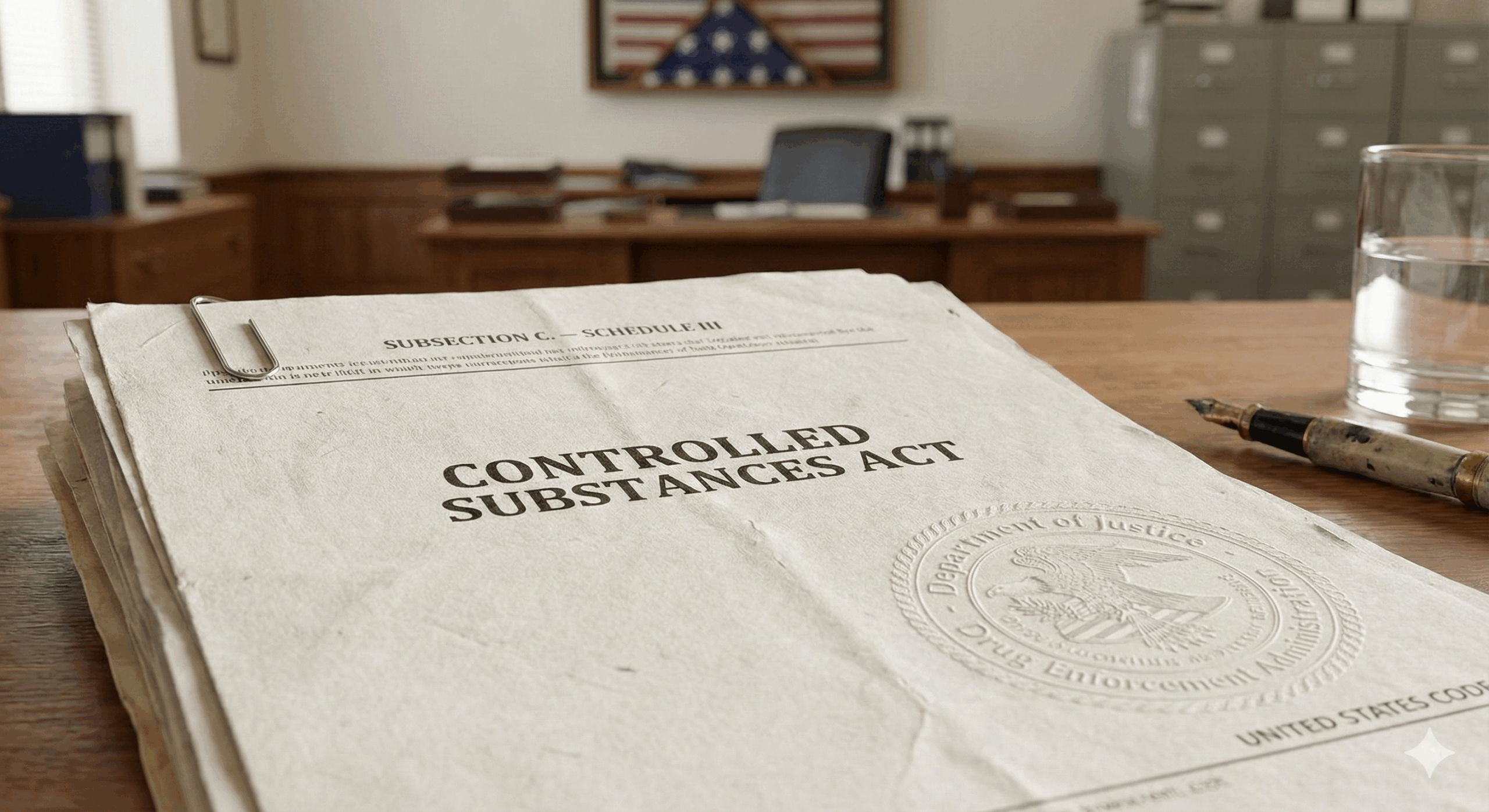
Tax policy is another major factor. Under Internal Revenue Code Section 280E, businesses involved with Schedule I substances cannot deduct ordinary expenses. Reclassification to Schedule III eliminates this restriction, allowing licensed cannabis businesses to operate under normal tax rules.
While rescheduling does not guarantee profitability, it removes a major structural disadvantage that has defined the cannabis industry since its inception.
What changes immediately
The executive order initiates a regulatory process rather than an overnight transformation, but several consequences are already clear. Research restrictions begin to loosen, and tax normalization becomes a realistic near-term outcome.
Equally important is the symbolic shift. Federal agencies, courts, and lawmakers will now approach cannabis from a baseline that recognizes medical value, influencing enforcement priorities and future policy discussions.
What does not change
Schedule III status does not legalize adult-use cannabis nationwide. It does not override state prohibition laws, authorize interstate commerce, or establish a comprehensive federal regulatory framework.
Banking access, immigration consequences, and criminal justice reform related to past convictions remain unresolved. Rescheduling is a structural correction, not a complete policy overhaul.
The CBD research framework and healthcare implications
The executive order is anchored by a federal-state CBD Research Pilot Program designed to support coordinated cannabinoid research and healthcare integration. This includes pathways for Medicaid-reimbursed senior care involving cannabinoid medicine.
The framework reflects an effort to clearly separate intoxicating cannabis products from non-intoxicating cannabinoids, addressing regulatory confusion that has persisted since the 2018 Farm Bill.
Economic and tax impact on cannabis businesses
Ending 280E taxation represents a foundational shift for state-legal cannabis operators. It allows businesses to reinvest, hire, and stabilize rather than operating under punitive tax conditions.

While broader federal reform is still needed, tax normalization alone significantly improves the sustainability of compliant businesses.
Political and regulatory implications
Rescheduling places increased pressure on Congress. Lawmakers can no longer rely on Schedule I status to justify inaction, and future debates will begin from a more grounded legal baseline.
The administration has signaled an intent to work with Congress on clearer distinctions between intoxicating cannabis and non-intoxicating products, emphasizing regulatory clarity over symbolism.
What happens next
Federal agencies will proceed with implementation. Researchers will move forward with expanded studies, businesses will reassess financial strategies, and states will monitor federal enforcement guidance.
Long-term reforms remain in Congress’s hands, but the legal context surrounding cannabis has permanently shifted.
A turning point, not a finish line
The December 18 executive order marks the end of the federal government’s most extreme stance on cannabis. It does not complete reform, but it removes the legal fiction that cannabis has no medical value.
Federal cannabis policy has entered a new phase. The foundation is set for regulation based on evidence rather than denial.
Frequently Asked Questions
What did Trump do about marijuana scheduling?
On December 18, 2025, President Donald Trump issued an executive order directing federal agencies to begin reclassifying marijuana from Schedule I to Schedule III under the Controlled Substances Act.
Is marijuana federally legal now?
No. Marijuana remains illegal at the federal level. Reclassification to Schedule III does not legalize cannabis or override state prohibition laws.
What does Schedule III mean for marijuana?
Schedule III means marijuana is recognized as having accepted medical use and a lower potential for abuse than Schedule I substances, while remaining federally controlled.
Does Schedule III eliminate the 280E tax rule?
Yes. Once marijuana is treated as a Schedule III substance, Internal Revenue Code Section 280E no longer applies to state-legal cannabis businesses.
Does rescheduling allow interstate cannabis commerce?
No. Interstate cannabis commerce remains illegal unless Congress passes additional legislation authorizing it.
How does rescheduling affect cannabis research?
Rescheduling significantly reduces federal research barriers, allowing expanded medical, clinical, and pharmaceutical studies involving cannabis.
Do state marijuana laws change because of this order?
No. State marijuana laws remain unchanged. States retain full authority to regulate or prohibit cannabis within their borders.
What is the federal CBD Research Pilot Program?
It is a federal-state initiative designed to support cannabinoid research, healthcare integration, and evidence-based regulation of CBD and related compounds.
Will Congress need to act next?
Yes. Comprehensive cannabis reform, including banking access and interstate commerce, requires congressional legislation.
Why is this considered a historic change?
This is the first time in over 50 years that the federal government has moved marijuana out of Schedule I, fundamentally changing its legal classification.