



Cannabis History • Genetics • Cultivation
The Godfathers of Ganja: A Deep Dive into Landrace Strains
Before the hype of Gelato and Runtz, there were the originals. We explore the ancient, genetically pure landrace strains that birthed the modern cannabis industry, from the peaks of the Hindu Kush to the wilds of Siberia.
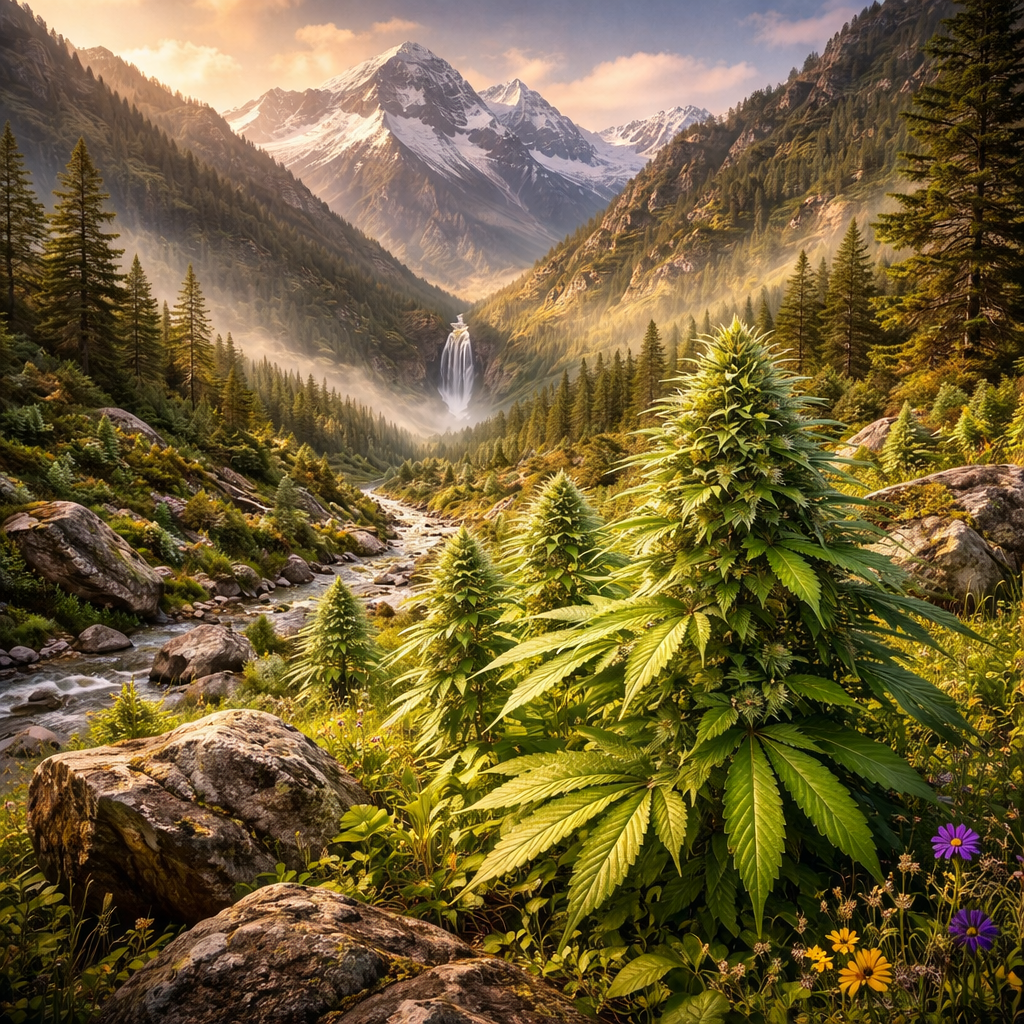
Image: Wild cannabis thriving in its natural, rugged habitat in the Hindu Kush.
TL;DR
- What is a Landrace? A landrace is a cannabis strain that has developed naturally in a specific geographic region over centuries, remaining 100% pure Indica or Sativa without human crossbreeding.
- Indica vs. Sativa Origins: Indicas (short, bushy) evolved in harsh, mountainous regions like Afghanistan, while Sativas (tall, lanky) adapted to tropical climates like Thailand and Africa.
- The "Ruderalis" Factor: Wild genetics from Siberia and Russia gave us the "autoflowering" trait, evolving to survive in brutal cold with short summers.
- Historical Context: Cannabis cultivation predates written language, the Pyramids, and the Roman Empire, with deep roots in Scythian and Central Asian history.
- Modern Relevance: While hard to find, landrace strains like Hindu Kush and Mazar are the genetic building blocks for almost all modern hybrids.
The "Wolf" of Weed: Defining Landrace
Walk into any dispensary today, and you are looking at a menu of mutts. That isn’t an insult; it’s just genetics. The Cookies, Cakes, and glues that dominate the shelves are poly-hybrids—plants bred with other plants, which were bred with other plants, designed specifically for high THC and bag appeal.
But trace those family trees back far enough, and you hit the source code: the Landrace.
A landrace is a pure cannabis variety that evolved in isolation in a specific geographic area. These plants weren't bred in a laboratory or a high-tech indoor facility. They were bred by nature. Over thousands of years, they adapted to the specific soil, rainfall, daylight hours, and pests of their native region.
Think of it this way: if modern strains are Golden Retrievers or Poodles (bred for specific traits), landrace strains are the Wolves. They are the wild, unaltered ancestors. They are the 100% pure Indicas from the mountains and the 100% pure Sativas from the tropics.
Today, true landraces are incredibly rare. The global exchange of seeds has muddied the gene pool. But for preservationists and connoisseurs, these strains are the Holy Grail—a direct link to the plant’s natural origins.
Older Than History (Literally)
It’s hard to wrap your head around just how long humans have been interacting with this plant. We aren't talking about the 60s. We aren't talking about the Jazz Age.
Cannabis has been cultivated for at least 6,000 years. To put that in perspective, landrace cannabis was growing wild and being harvested before:
- The Great Pyramids of Giza were built.
- The invention of the wheel.
- The construction of Stonehenge.
- The founding of the Roman Empire.
- The birth of Jesus Christ (by about 4,000 years).
The history of these strains is tied to the movement of ancient peoples. The Scythians, nomadic warriors of the Eurasian steppes, were among the first to master horseback riding and, coincidentally, the first to spread cannabis culture. They carried seeds along the Silk Road, effectively becoming the world's first seed bank.
By the time the Scythians were roaming Siberia and Mongolia, cannabis had already established itself as a versatile crop for fiber, ritual, and medicine. It wasn't a "drug" in the modern sense; it was a companion plant to human civilization.
The Big Three: Indica, Sativa, Ruderalis
Landrace strains are generally categorized by where they grew up. The environment dictated their structure, their flowering time, and their chemical profile.
1. The Mountain Survivors (Indica)
These strains come from the rough, arid, and cold regions of Central Asia—specifically the Hindu Kush mountain range between Afghanistan and Pakistan.
To survive the howling winds and early winters, these plants evolved to be short, stout, and bushy. They have broad leaves to soak up as much sun as possible during short summers. They flower quickly (to beat the snow) and produce a thick coat of resin to protect themselves from UV rays and cold. This is why traditional Afghan hash is so legendary—the plant literally sweats resin as a survival mechanism.
2. The Tropical Giants (Sativa)
Move down to the equator—Thailand, Africa, Colombia, India—and the plant changes. In these hot, humid environments with long growing seasons, the plants stretch out.
Landrace Sativas (often called Narrow Leaf Drugs or NLDs) grow tall and lanky to avoid mold in the humidity. They have thin leaves and take a long time to flower because they don't have to worry about winter killing them.
3. The Siberian Tough Guy (Ruderalis)
Then, there is the weird cousin: Cannabis Ruderalis.
Identified by Russian botanist Janischevsky in 1924, these plants evolved in the brutal climates of Siberia and Russia. Because the summers were so short and the light cycles so extreme, these plants couldn't rely on the sun to tell them when to flower.
Instead, they evolved to flower based on age. This is the "autoflowering" trait. While wild Ruderalis has low THC, it is the genetic backbone of the entire modern autoflower market.
The Legends: Mazar, Hindu, and Siberian
If you want to understand the roots of the family tree, you have to look at the specific cultivars that defined the gene pool.
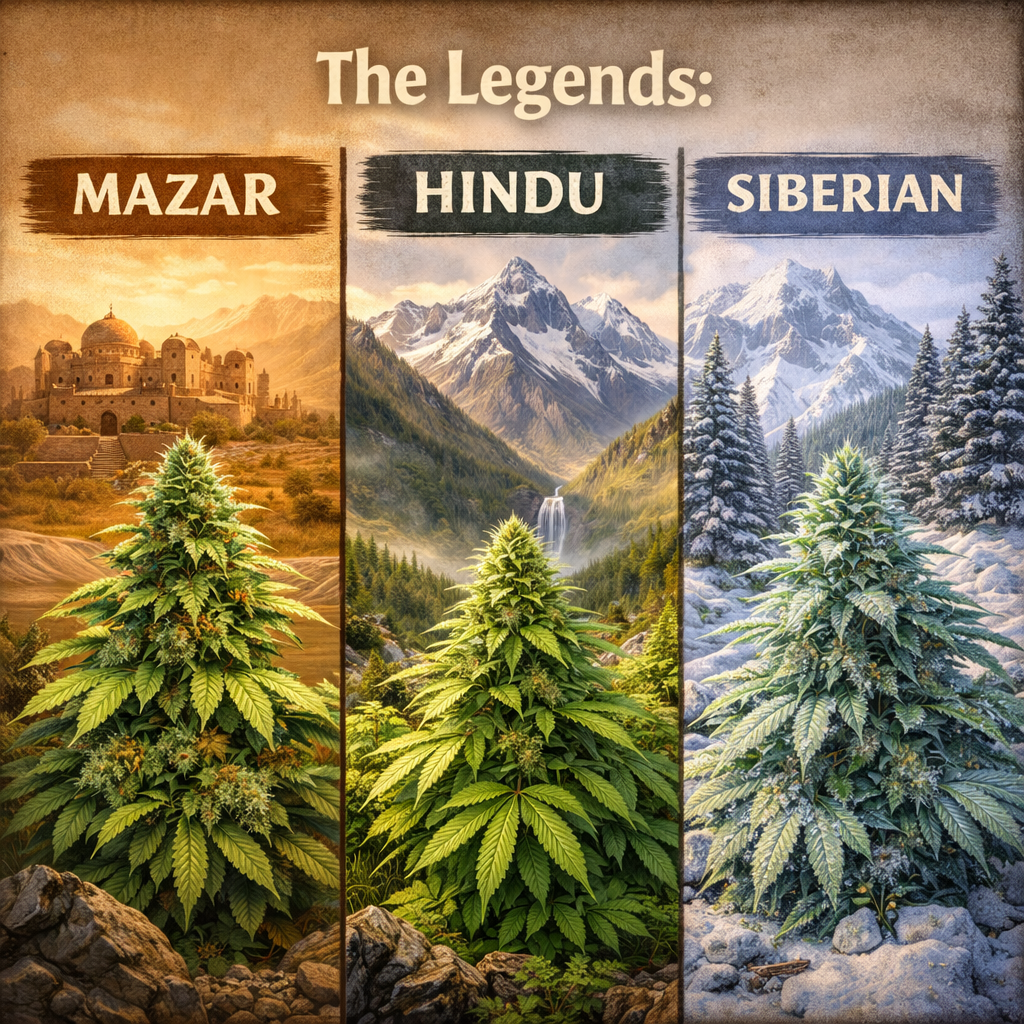
Mazar-i-Sharif
Named after the city in Northern Afghanistan, this is the heart of hashish culture. Mazar is a pure Indica that grows in the fertile fields of the Balkh province. It is famous for producing the "Milk of Mazar"—resin so high quality it is legendary among hash makers.
When you smoke a heavy, knockout Indica today, you are likely feeling the distant DNA of a Mazar landrace. It is known for earthy, spicy notes and a sedative power that feels like a warm blanket.
Hindu Kush
The namesake of the mountains, Hindu Kush is the quintessential Indica. It is short, resilient, and smells of sandalwood and charas. It has been used for centuries to make hand-rubbed hashish. Because it evolved in such a harsh climate, it is naturally resistant to mold and pests, making it a favorite for breeders looking to add toughness to their hybrids.
Siberian Landrace
This represents the Ruderalis lineage. It’s a fast finisher, sometimes ready in just 55-60 days. While it doesn't have the THC ceiling of a modern hybrid (usually clocking in around 12-19%), it offers a unique terpene profile of pine and citrus and a resilience that is unmatched. It grows where other weed would die.
The Hybrid Bridge: Understanding "Nemesis"
So what happens when you take these ancient genetics and mix them? You get F1 Hybrids—the bridge between the ancient world and the modern dispensary.
A perfect example is a strain called Nemesis. It is a 50/50 mix of a Northern Indian Sativa and a Nepali Indica.
Why does this matter?
By crossing the Nepali (which is adapted to cold, high altitudes and grows dense buds) with the Indian (which adds vigor and cerebral effects), breeders created a plant that has "hybrid vigor."
Nemesis finishes fast (7-9 weeks), resists mold like a champ, and delivers a punchy high that relaxes the body without putting you in a coma. It illustrates exactly why landraces are so valuable: they are the primary colors used to paint the masterpiece of modern cannabis.
Why Grow Landraces Today?
You might be asking: "If modern weed is stronger and prettier, why bother with these old gnarly plants?"
It’s a valid question. Landraces can be finicky. They can grow too tall, yield less, or have lower THC numbers than the latest "Super Runtz" cut. But here is why they are making a comeback:
- The "Entourage Effect": Modern breeding chases THC numbers, often at the expense of minor cannabinoids and rare terpenes. Landraces possess a broader, more complex chemical profile that produces a unique, full-spectrum high you can't get from commercial bud.
- Resilience: If you are an outdoor grower, landraces are tanks. They evolved to survive without nutrients, pesticides, or pH-balanced water.
- Preservation: Growing landraces is an act of conservation. We are losing these genetics to hybridization and habitat destruction. By growing them, you are keeping a 6,000-year-old history alive.
Where to Find the Real Deal
Let's be real: you probably won't find pure landrace seeds at your local dispensary. Most commercial seed banks sell "poly-hybrids" disguised as classics.
If you want to hunt for the originals, you need to look for breeders who specialize in "ethnobotanical" preservation. According to the deep-dive research, there are a few trusted names in the game:
- The Real Seed Company: These guys are purists. They source seeds directly from farmers in the Hindu Kush, Himalayas, and Lebanon. No hybrids, just open-pollinated heirlooms.
- ACE Seeds: A group of breeders dedicated to preserving genetics, specifically Sativas from Panama, Thailand, and Africa.
- Indian Landrace Exchange: A collective focused on preserving the biodiversity of Northern India and the Himalayas.
Frequently Asked Questions
What is the difference between a Landrace and an Heirloom?
A Landrace grows wild in its native habitat. An Heirloom is a landrace that has been taken out of its natural habitat and cultivated by humans (like older growers in California) for generations, preserving its genetics without crossbreeding.
Are Landrace strains stronger?
Not necessarily in terms of THC percentage. Modern hybrids are bred for maximum potency. However, many users report that landraces offer a "cleaner," longer-lasting, and more distinct high due to their unique terpene and cannabinoid profiles.
Can I grow a pure Sativa indoors?
It is difficult. Pure landrace Sativas can stretch to 15 feet tall and take 14-16 weeks to flower. Indoor growers usually prefer hybrids or Indicas (like Hindu Kush) that stay short and finish quickly.
What is the oldest weed strain?
It is impossible to point to one "strain," but the genetics from Central Asia (the Hindu Kush region) are widely considered the ancestors of most cannabis. The plants used by the Scythians thousands of years ago would be recognizable as early landrace varieties.
Why do landraces matter for modern breeding?
They provide genetic diversity. If all modern weed is related (inbred), the plants become susceptible to disease. Landraces introduce "fresh blood" (new genes) that can improve resistance to pests, mold, and changing climates.