

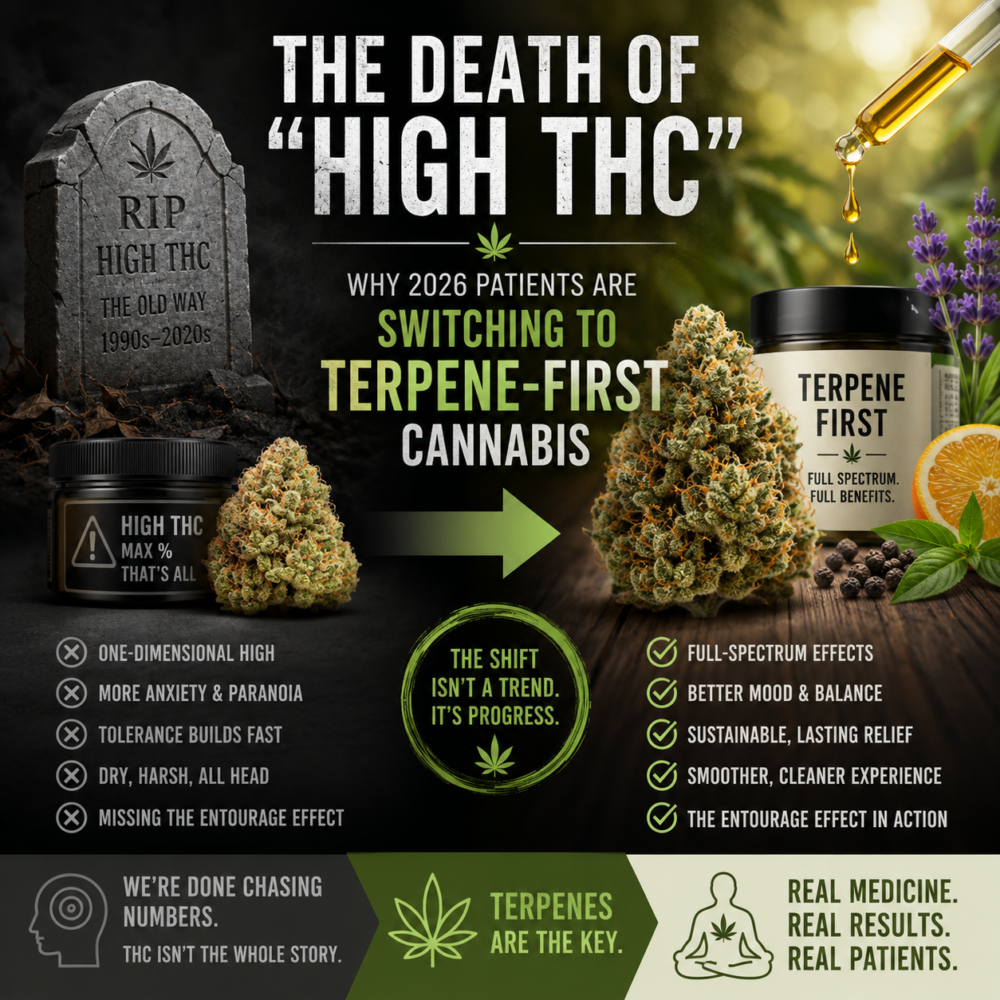

The End of the THC Arms Race: Why 2026 Patients Are Buying Terpenes, Not Numbers
Five years ago, walk into any dispensary and the first question out of most customers’ mouths was about THC percentage. Higher number, better weed. That was the whole conversation.
It is not the conversation anymore.
Patients in 2026 are reading labels. They are asking about terpenes. They are asking who grew it, when it was tested, and whether last month’s batch hit the same way as the one before it. A lot of people have stopped chasing the strongest thing on the shelf because, after a while, the strongest thing on the shelf stops being the thing that actually helps.
Some of this is just maturity. The medical cannabis world has had time to grow up. Telehealth has made it easier to talk to a real doctor without sitting in a waiting room, state programs have stabilized, and there are more honest educational resources online than there were a few years back. Getting a medical card has gone from “I need legal cover” to “I want someone qualified to help me figure out what works for me.”
Patients Are Doing Their Homework on Strains
The questions at the counter sound completely different in 2026. Instead of “what’s your highest THC,” budtenders are hearing things like:
- Which terpenes are dominant in this one?
- Is this better for sleep, or will it wake me up?
- How consistent has this batch been?
- Where is the lab report?
You can see the same shift online. Resources covering different cannabis strains get more traffic every year because people genuinely want to understand what is in the jar before they spend $50 on it. Patients keep their own notes too — mental ones or actual ones in their phone — about what helped them sleep, what got them through a workday, what calmed a flare-up of pain. That kind of attention used to be rare. It is normal now.
Telehealth Has Quietly Changed Everything
Cannabis telemedicine deserves a lot of credit for this shift. In most legal states, you can now meet with a licensed cannabis physician over video instead of driving across town to a clinic. That has been a real fix for people who needed it most: rural patients, older folks, people with mobility issues, anyone juggling a chronic condition who could not afford to lose half a day to a thirty-minute appointment.
A good telehealth visit is not a rubber stamp either. The better doctors will walk patients through cannabinoid ratios, what a sativa-heavy terpene profile actually does, dosage strategy, and the differences between flower, edibles, and tinctures. That kind of conversation used to be hard to find. Now it is a Tuesday afternoon Zoom call.
State Rules Still Steer the Whole Thing
Where you live still shapes how you buy. Oklahoma is a useful example: the state’s $25 physician fee model has made the program one of the most affordable in the country, and most residents now get an Oklahoma medical marijuana card through a registered telehealth provider. The appeal is partly the lower retail tax, partly the legal protection, and partly the fact that the whole process can be done from a couch. Patients are paying attention to the regulatory side too — not just the products. Things like physician quality, telemedicine eligibility, renewal hassle, and the long-term out-of-pocket
cost of staying ina medical program all factor into the decision now in a way they did not five years ago.
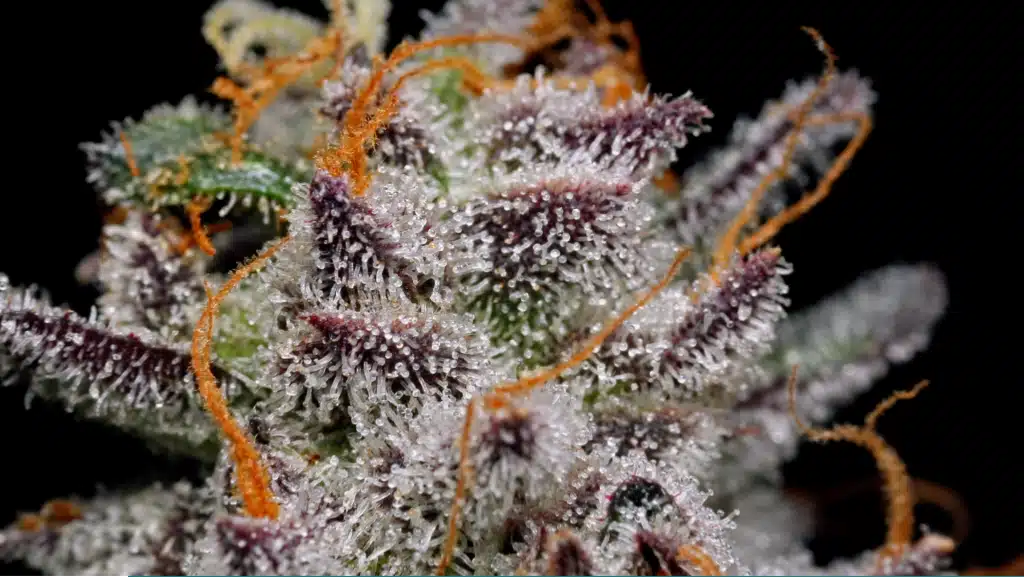
Why High THC Stopped Being the Selling Point
Here is the part the industry took a while to admit: a lot of patients now actively avoid the highest-THC products on the shelf. Not because they are afraid of getting too high, exactly, but because the experience is often worse. Anxious. Sloppy. Not useful for what they actually need cannabis for.
What sells instead is balance. CBD-to-THC ratios. Specific terpene combinations. Minor cannabinoids like CBN for sleep or CBG for focus. Microdosing. The wellness-focused crowd, especially patients in their fifties and up, has been driving this hard, and the industry is finally catching up. You see more brands leading their packaging with terpene profiles instead of a giant 32% printed in bold.
Consistency Is the New Potency
The other complaint that finally pushed the industry to change: nothing was consistent. The same strain from the same brand could test 28% one month and 19% the next. Terpenes would be present on the lab sheet and absent in the jar. Labels lied. Cultivation was sloppy.
That stuff still happens, but patients have less patience for it. They are paying for verified lab testing, transparent grow practices, predictable cannabinoid content, and terpenes that actually survive from harvest to jar. If you use cannabis on a schedule — for sleep every night, or for pain management through the workday — a product that hits differently every time is worse than a less potent one that hits the same way twice.
Recreational Markets Raised the Bar (and the Prices)
Recreational legalization made cannabis available almost everywhere, but it also trained customers to be picky. When a dispensary has 200 SKUs on the wall, you start caring about who grew what and why. Sourcing matters. Packaging matters. Value matters.
Worth noting: in several recreational states, the tax stack on adult-use purchases has gotten heavy enough that frequent buyers are coming back to medical programs just to save money. Lower taxes, higher purchase limits, better legal footing. Medical cards are not going away just because rec is everywhere — in some states they make more financial sense than they ever have.
Cannabis Is Becoming a Long Game
The biggest shift might be psychological. Patients are treating cannabis less like a Friday night thing and more like a part of their health routine. They know which strain helps them sleep through the night. They know which one they can take before a long workday without losing focus. They know which terpenes calm them down at the end of a hard week.
That is not casual experimentation. It is closer to how someone manages a supplement stack or a workout schedule — deliberate, tracked, refined over time. Cannabis culture is quietly becoming more thoughtful, and the buying habits are following.
FAQ
Why are patients getting pickier about strains?
Better information, mostly. People understand terpenes and cannabinoid ratios now, doctors are easier to reach, and patients have learned the hard way that the strongest product is not always the right one.
What does a telehealth cannabis doctor actually do?
They are a licensed physician who evaluates you over video, qualifies you for your state’s medical program if appropriate, and ideally talks through dosing, products, and what to try first.
Why do state regulations still matter so much?
Because they decide everything downstream: how you see a doctor, what taxes you pay, how often you renew, what you can legally carry, and what kind of legal protection your card actually provides.
Are terpenes really that important?
Most patients who pay attention to them think so. Terpenes seem to shape how a strain feels in ways THC alone does not explain, which is why labels and budtenders both lead with them more often now.
Is a medical card still worth getting now that rec is legal in so many places?
Often yes. Lower taxes, higher possession limits, real legal protection at work or with custody, and access to a doctor who can actually advise you. For regular users, the math usually still favors a card.
The Short Version
Medical cannabis in 2026 is a slower, more deliberate market than it used to be. Patients read labels. They book telehealth appointments. They buy for terpenes and consistency rather than the biggest number on the jar. The plant has not changed much. The people buying it have.

