

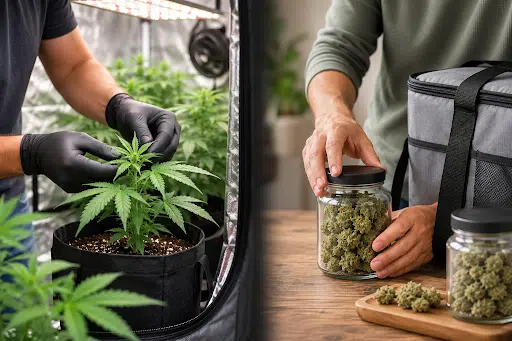

This comparison is made with two groups of people in mind – first-time growers choosing which strain to get for their initial order of seeds or clones, and more advanced growers trying to figure out if it is worth spending a season growing a particular genetic or just buying it cured right away. Making a choice whether to grow a particular strain or to get it cured is a matter of time, environmental adaptability, and patience. There are some genetics that will be grateful to a home grower with their easy growth process. But there are some which will even challenge an advanced grower with their long flowering periods, environmental needs, and requirements for nutrients, which will be rather costly if something goes wrong.
In other words, the best choice is to have fast-finishing and resilient genetics for home growing, but dense slow-finishing varieties tend to be more consistent when purchased as pre-cured buds, and most skilled growers eventually do both.
Strains That Reward the Home Grower
Forgiving home grow strains typically combine short flowering cycles, tolerance for inconsistent care, and strong resistance to common pests.
A handful of genetics are forgiving enough that a first-time grower can get a solid harvest without a fully controlled indoor setup.
- Hybrids that can withstand temperature fluctuations and inconsistent watering regimes
- Shorter flowering cycles, roughly 8 to 9 weeks, that reduce the window for mold or pest problems
- Strong structural genetics that do not need heavy trellising or support
- Nutrient requirements that will not penalize minor feed errors
Examples worth starting with:
- Northern Lights: fast finisher, small in size, and very pest-resistant
- Blue Dream: balanced growth structure and tolerant to nutrient imbalances
- White Widow: strong and able to tolerate uneven waterings
Growers exploring beginner-friendly genetics can also look at options like the Pure Michigan strain, which is often cited as a manageable pick for a first home grow because of its steady growth pattern and shorter finish time.
Strains Better Left to the Professionals
Difficult strains typically share three traits: long flowering times, high humidity sensitivity, and a low yield-to-effort ratio that makes crop loss costly.
Other genetics are simply not worth the risk on a first attempt, especially in a home environment without climate control.
- Phenotypes with a long flower cycle of 12 weeks or more, increasing risk to late-season insects or molds
- Dense, tight bud structure prone to bud rot in humid conditions
- Sensitive terpene profiles that degrade quickly without a precise dry and cure
- Higher nutrient sensitivity that can cause lockout or burn with small dosing errors
Examples that are harder to bring to a clean finish at home:
- Wedding Cake: dense colas that trap moisture and are prone to bud rot
- Gelato: sensitive to nutrient swings and slow to finish
- Amnesia Haze: long flowering window that extends mold and pest exposure
As per High Times, novice growers who attempt to grow difficult genetics without having the proper equipment end up losing some or even all of their crop due to problems that could easily have been avoided, such as lack of air circulation or uneven feedings. Similarly, Cornell University guidelines for growing marijuana state that humidity regulation during the flowering process is among the main reasons why a grower ends up with either a good crop or a moldy one.
Home Grow vs. Delivery: Strain Comparison
Strain | Flowering Time | Difficulty | Humidity Risk | Best Sourced As |
Northern Lights | 7 to 8 weeks | Easy | Low | Home grow |
Blue Dream | 8 to 9 weeks | Easy | Low | Home grow |
White Widow | 8 to 9 weeks | Easy | Low to moderate | Home grow |
Wedding Cake | 8 to 9 weeks | Moderate to hard | High | Delivery |
Gelato | 8 to 9 weeks | Moderate | Moderate | Delivery |
Amnesia Haze | 10 to 12 weeks | Hard | High | Delivery |
The Time Gap Every Home Grower Faces
A full grow cycle breaks down into four stages, and skipping steps to save time is what most often leads to a disappointing harvest.
Even with an easy strain, seed to harvest realistically takes several months once every stage is accounted for.
- Germination: 3 to 10 days
- Vegetative growth: 4 to 8 weeks depending on desired plant size
- Flowering: 8 to 12+ weeks depending on the strain
- Drying and curing: 2 to 4 weeks for proper flavor and potency development
Starting from a clone instead of seed can shave time off that runway, but growers still need to know how long clones take to root before counting on a faster turnaround, since a poorly rooted clone can stall out and cost several weeks. That is still a long timeline for anyone hoping to have flower on hand consistently.
Growers who are between harvests, or who took a chance on a difficult strain and want something reliable in the meantime, often turn to weed delivery Sacramento options to bridge that gap. It is a practical way to keep a rotation going without rushing a harvest or pulling plants early out of impatience.
Signs a Home Grow Is Struggling
Catching a problem early is what usually separates a salvageable harvest from a total loss.
Not every issue in a home grow shows up right away, which is why regular checks matter more than most first-time growers expect.
- Yellowing or curling leaves that spread quickly, often a sign of nutrient lockout or overwatering
- Dark, wet spots on buds during flowering, an early indicator of bud rot that can spread within days
- Slow or stalled vertical growth during the vegetative stage, which can point to root problems or insufficient light
- A strong ammonia or sour smell near the soil, usually linked to overwatering or root rot.
- Visible pests on the underside of leaves, which spread faster in warm, humid grow tents
One of the most effective ways to safeguard cannabis yields from pests and diseases is the early recognition of pests and diseases, based on the advice provided by the University of California Statewide Integrated Pest Management Program, because any kind of infestation or mold infection develops much faster after the plant enters its flowering stage. If the problem becomes apparent too late, then the infected part of the crop will not be salvaged.
Indoor vs. Outdoor Growing: Does It Change the Decision?
Outdoor grows depend on local climate, while indoor setups trade higher costs for more control over humidity and temperature.
Where a plant is grown changes how much the strain’s difficulty actually matters.
- Indoor grows offer more control over temperature and humidity, which makes it easier to push through a harder strain successfully.
- Outdoor grows depend heavily on local climate, and a humid fall season can undo months of otherwise healthy growth.
- Sacramento’s dry summers work in favor of outdoor growers, but early fall humidity swings still put dense bud strains at risk.
- Indoor setups cost more upfront but reduce the odds of losing a crop to weather right before harvest.
For growers without a controlled indoor space, sticking to the more forgiving strains outlined earlier and leaving the harder genetics to a licensed grower is usually the safer bet.
Growing and Buying Are Not Mutually Exclusive
A hybrid approach, growing forgiving strains at home while ordering delicate or slow finishing genetics, tends to reduce both cost and risk over a full season.
Most experienced home cultivators end up doing both rather than choosing one approach permanently.
- Dedicate limited grow space to genetics that are forgiving and cost-effective to produce at home.
- Order harder-to-grow or more delicate strains rather than risk a full season on them.
- Keep a delivery option on hand as a backup if a grow is hit by pests, mold, or nutrient lockout.t
- Rotate strategy season to season based on what actually performed well at home
This approach also protects against a total loss. If a grow fails partway through, having a reliable delivery option means there is no gap in supply while plants are replanted and the next cycle gets underway.
What to Check Before Ordering Instead of Growing
Source: IMAGE
A cured product is only a better option than a home grow if it comes with real testing and clear sourcing information.
Choosing to order a strain instead of growing it only pays off if the product quality holds up. A few things are worth checking before placing an order.
- Lab testing results for potency and contaminants, which should be available for any legally sold product.
- Harvest or packaged date, since fresher product generally preserves terpene profile better
- Cultivator or brand reputation, especially for strains known to be difficult to grow cleanly
- Storage conditions at pickup or delivery, since heat exposure during transport can degrade quality quickly.
Skipping these checks defeats the purpose of choosing delivery over a home grow in the first place. According to the California Department of Cannabis Control’s testing laboratory program, all licensed cannabis products sold in the state must pass mandatory testing for potency and contaminants before reaching a dispensary or delivery menu, which is exactly the quality control a home grow cannot fully replicate. The entire advantage of buying a difficult strain instead of growing it comes from that consistent, professionally managed testing process.
FAQ
Is it legal to grow cannabis at home in California?
Yes. According to the California Department of Cannabis Control, those 21 and older may grow up to six living cannabis plants per household for personal use, though local city or county ordinances can add further restrictions.
How long does it take to grow a strain from seed to harvest?
Most strains take 3 to 4 months from germination to a fully cured, smokable product, covering germination, vegetative growth, flowering, and drying and curing.
Why are some strains more reliable as delivery orders than home grows?
Strains with long flowering times, dense bud structure, or high humidity sensitivity are harder to bring to a clean finish without controlled growing conditions. According to Cornell University’s cannabis cultivation resources, humidity management during flowering is one of the most consistent factors separating a clean harvest from crop loss, which is why professionally cultivated versions of these genetics tend to be more reliable.
What is the best strain for a first-time home grower?
Northern Lights and Blue Dream are commonly recommended for first-time growers because of their short flowering times, tolerance for minor watering or feeding mistakes, and resistance to common pests. Starting with a forgiving strain reduces the chance of losing a first harvest to preventable issues.
Is it cheaper to grow cannabis at home than order it through delivery?
Home growing can be cheaper per gram over a full harvest, but only if the grow succeeds without crop loss, since the upfront cost of lights, soil, and nutrients does not pay off on a failed cycle. For strains with a high risk of mold or nutrient sensitivity, ordering through delivery often works out more cost-effective once a lost harvest is factored in.
Conclusion
Choosing between growing a strain and ordering it is not about picking a side permanently. It comes down to matching the genetics to the setup that is actually available. Easy, resilient strains like Northern Lights or Blue Dream are worth the time investment at home, while finicky,

