

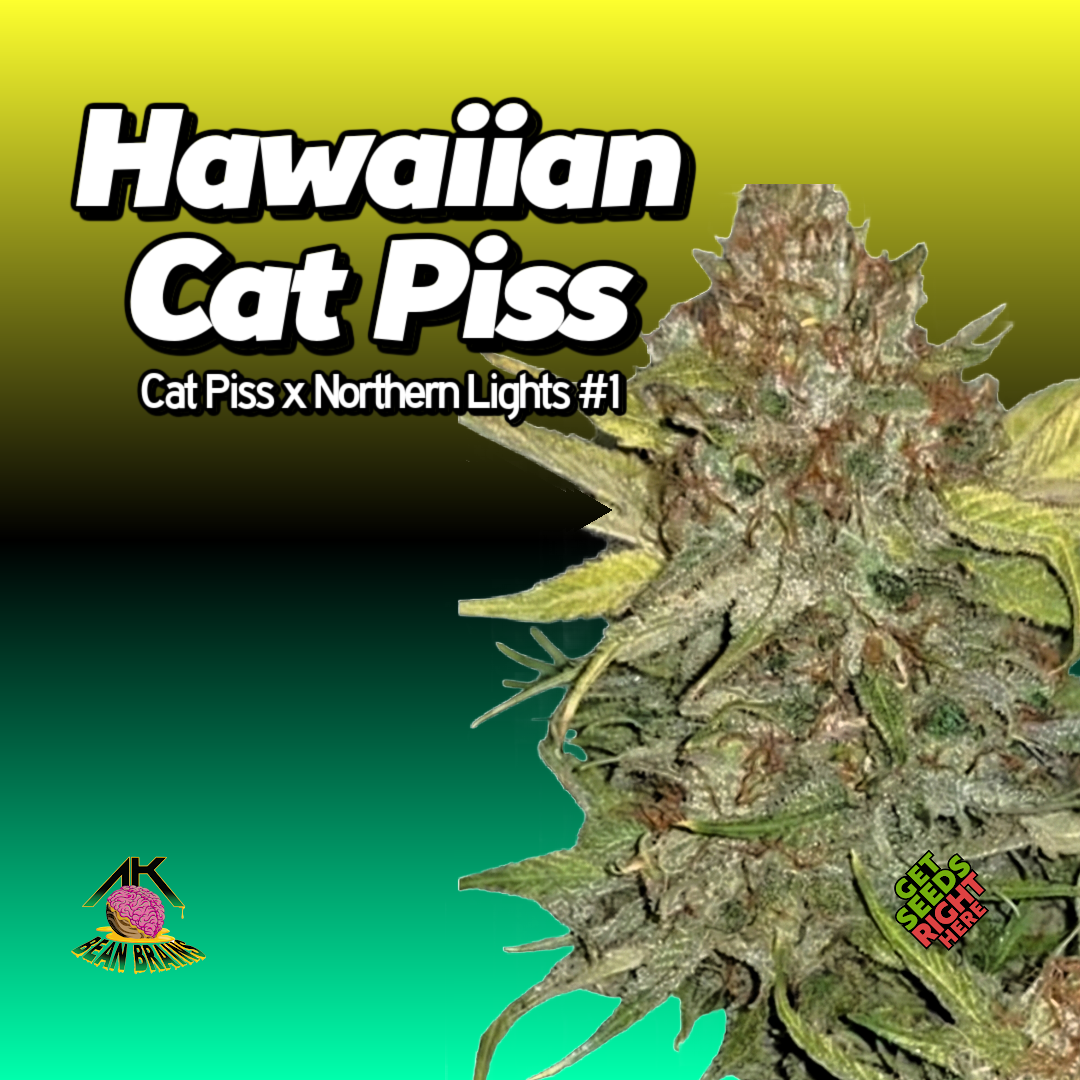
Hawaiian Cat Piss
An electrifying sativa-leaning hybrid crossing Cat Piss x Northern Lights #1,famed for its sharp ammonia nose and soaring, psychedelic energy.
What is Hawaiian Cat Piss?
Hawaiian Cat Piss by AK Bean Brains is a masterclass in preserving legendary "niche" genetics. By crossing the notoriously pungent Cat Piss with the foundational Northern Lights #1, AK Bean Brains has stabilized a cultivar that offers the wild, ammonia-heavy aromatics of the 90s with the improved structure and resin density of the NL line.
This is not a strain for those seeking fruity or dessert-like profiles. Hawaiian Cat Piss is unapologetically "loud," featuring a sharp, chemical funk that cuts through any room. The Northern Lights influence helps tame the lanky Hawaiian growth habit into a more manageable profile while boosting the trichome coverage, making it a favorite for those who appreciate old-school sativa effects without the 14-week wait time.
Terpene Profile
The Hawaiian Cat Piss strain terpenes are defined by a polarizing, high-intensity aromatic profile. The "ammonia" scent is front and center, backed by a complex layer of acrid pine, skunk, and a metallic finish. It is a terpene profile that demands attention and provides a unique sensory experience rarely found in modern poly-hybrids.
Growing Hawaiian Cat Piss
Growing Hawaiian Cat Piss requires a bit more patience and space than a standard indica. Expect a significant stretch during the first three weeks of flower. The NL#1 genetics ensure the branches are sturdy enough to support the weight of the elongated sativa-style colas, but some light staking or trellis netting is highly recommended to maximize the canopy's potential.
Key Growing Tips
-
📐Vertical ManagementFlip to flower early; these plants can easily triple in height if left to veg too long.
-
🌬️Odor ControlHigh-quality carbon filters are mandatory. The ammonia/skunk smell is pervasive even in mid-flower.
-
☀️LightingThrives under high-intensity light; the sativa lineage allows it to process heavy PPFD with ease.
This strain is a "connoisseur's selection." While the bud structure is slightly more open than an indica, the trichome production is immense. It's an excellent choice for those looking to create unique "Haze-style" extracts that stand out from the sea of fruity resins currently on the market.
Flower Quality & Curing
Hawaiian Cat Piss produces spear-shaped colas with bright orange pistils and a thick, greasy coating of resin. The cure is vital for this strain, as it dries, the acrid ammonia notes mellow slightly to reveal more complex spice and pine undertones. Properly cured flower will burn with a light grey ash and provide an immediate, expansive hit.
Effects & Experience
The **Hawaiian Cat Piss strain effects** are heavily centered on the sativa side of the spectrum. It offers a powerful, energetic head high that can be nearly psychedelic for novice users. The Northern Lights influence prevents the "racy" anxiety often associated with pure sativas, adding a soft physical cushion that keeps the experience grounded and enjoyable.
Best Clone Pairings
Interested in exploring more elite-tier genetics? These clones pair perfectly with Hawaiian Cat Piss, offering a variety of terpene profiles and growth structures:
Frequently Asked Questions
Hawaiian Cat Piss is a hybrid created by AK Bean Brains, crossing a vintage Cat Piss cut with Northern Lights #1. This pairing blends the exotic, sharp aromatics of the Cat Piss with the legendary stability and resin production of the original Northern Lights line.
The "Cat Piss" aroma is a rare terpene expression dominated by high levels of Terpinolene and specific sulfur-containing compounds. While polarizing, it is highly sought after by connoisseurs for its unique chemical funk and association with potent sativa effects.
Expect a significant stretch of 2X to 3X its vegetative height. It is recommended to use LST (Low Stress Training) or a Scrog net to keep the canopy height manageable in indoor environments.
Yes, in the right climate. Because of its 9-11 week flowering time, it thrives in regions with long, warm autumns. Its open bud structure also provides natural resistance to mold and mildew compared to dense indicas.

